
01 BRITISH SOCIETY OF LIFESTYLE MEDICINE CONFERENCE | SEPTEMBER 2026
Reimagining Personalised Care
Co-designed Lifestyle Medicine Interventions for Underserved Populations
A conference presentation at the British Society of Lifestyle Medicine Conference 2026.
This presentation shares the early findings from a co-designed Lifestyle Medicine service delivered across all seven Primary Care Networks in Lewisham as part of Integrated Neighbourhood Teams. The programme explored how personalised, culturally tailored support can improve metabolic health, wellbeing and self-management for people living with multiple long-term conditions.
02 AT A GLANCE
Who and where
Delivered across all seven Primary Care Networks in Lewisham, the service supports adults living with multiple long-term conditions, with targeted recruitment of people experiencing three or more cardiovascular disease-related conditions.
What we delivered
Patients received personalised one-to-one and group support covering all six pillars of Lifestyle Medicine, delivered by Health & Wellbeing Coaches alongside routine medical care as part of Integrated Neighbourhood Teams.
Key Finding
After three months, participants demonstrated significant improvements across a broad range of clinical, behavioural and wellbeing measures, including blood pressure, HbA1c, mental wellbeing and confidence in managing their own health.
03 CONTEXT & APPROACH
Lifestyle Medicine has the potential to improve outcomes for people living with multiple long-term conditions, but delivering personalised support at scale remains a challenge.
This service was co-designed to integrate Lifestyle Medicine into routine care, providing culturally tailored support that helps people improve both their physical health and their confidence to manage it. By working across Integrated Neighbourhood Teams, the programme demonstrates how Lifestyle Medicine can support more joined-up, person-centred care in communities experiencing significant health inequalities.
Why this work matters
The service was available to all adults across the borough, with targeted recruitment of people living with three or more cardiovascular disease-related conditions.
Participants received personalised support through:
One-to-one coaching
Group sessions
Interventions across all six pillars of Lifestyle Medicine
Culturally tailored behaviour change support
Ongoing follow-up alongside standard medical care
Assessments were completed at baseline and after three months, measuring biometrics, HbA1c, health-related quality of life and a range of patient-reported wellbeing outcomes.
What we did
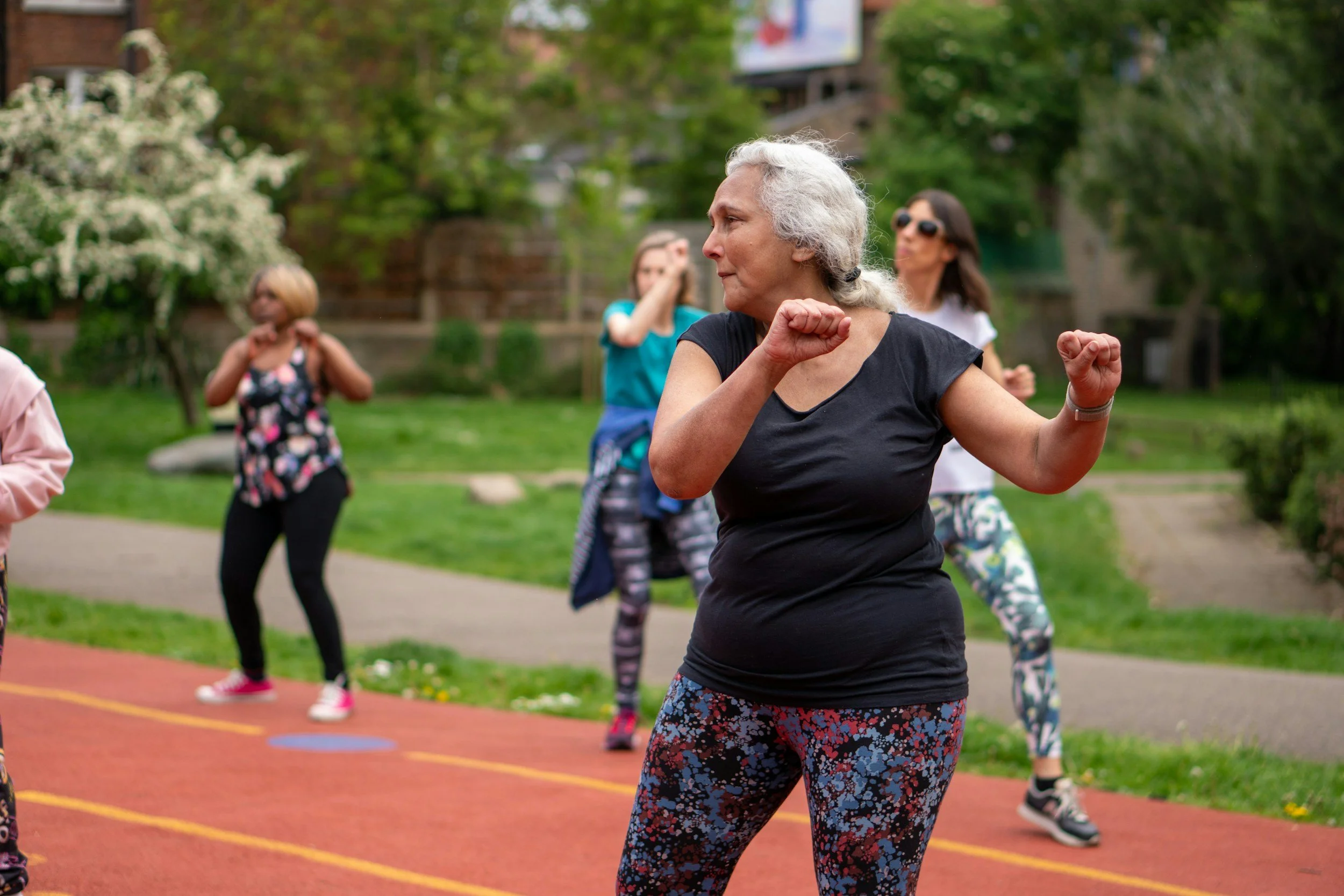
04 FINDINGS
The first evaluation included 56 participants, with 54 completing follow-up. The median age was 57 years, and 66% identified as non-White, reflecting the diverse communities served by the programme.
Significant improvements were observed across multiple outcome measures, including:
HbA1c reduced from 65.5 mmol/mol to 55.3 mmol/mol (p=0.002).
Median systolic blood pressure reduced from 150 mmHg to 141 mmHg (p=0.004).
Improvements in BMI, waist circumference and weight.
Significant improvements in social connection, mental wellbeing, confidence in managing health, sleep quality and quality of life.
Participants also reported eating more plants each day and maintaining or increasing weekly physical activity.
What we observed
Participants consistently described the service as practical, accessible and empowering.
What participants told us
"I feel more confident about what I can control, and can make changes to my wellbeing."
"I appreciated that there is a service to pick up people who'd otherwise be forgotten."
05 IMPLICATIONS
These early findings demonstrate how integrating Lifestyle Medicine into neighbourhood-based services can improve outcomes for people living with multimorbidity in areas of high deprivation.
The programme shows that culturally tailored, personalised support can deliver measurable improvements across clinical outcomes, wellbeing and self-management, helping organisations move towards more preventative, person-centred models of care.
What this means for practice
06 SOURCE AND CREDITS
Presented at the British Society of Lifestyle Medicine Conference 2026
Authors
Camille Hirons, Sanika Chourhari, Kehinde Akinniranye, Agiatu Bangura and Barnaby Hirons
Explore the presentation
-
Methods
Adults across Lewisham were eligible to join the programme, with targeted recruitment of people living with three or more cardiovascular disease-related conditions. The service operated alongside standard medical care.
Assessments at baseline and three months included biometrics, HbA1c, visual analogue scales (VAS) covering wellbeing measures, and EQ5D5L health-related quality of life. Statistical analysis used the Wilcoxon test for paired samples.
Headline Results
56 participants at baseline; 54 at follow-up.
Significant improvements across HbA1c, systolic blood pressure, BMI, waist circumference, social connection, mental wellbeing, confidence in managing health, sleep, daily plant consumption, physical activity and quality of life (all p<0.01).
-
Presentation
British Society of Lifestyle Medicine Conference 2026
Presentation title
Reimagining Personalised Care: Co-designed Lifestyle Medicine Interventions for Underserved Populations.
Authors
Camille Hirons, Sanika Chourhari, Kehinde Akinniranye, Agiatu Bangura and Barnaby Hirons.
Copyright
© 2026 Lifestyle Medicine Accelerator. Conference poster reproduced with permission of the authors. Please contact us if you wish to reuse or reproduce this material.
07 NEXT STEP
Explore a similar approach in your organisation
We work with healthcare organisations to design and deliver practical, evidence-based Lifestyle Medicine services tailored to local populations.

Lifestyle Medicine Service Assessment
If you’re exploring how lifestyle medicine could work in your setting, this short assessment is a useful place to start. It will help you get a sense of where you are now, and what might be needed to move forward.